If you are experiencing the Empty Nest Syndrome or know someone that you would like to help with this, please do not hesitate to contact me by following the instructions below.
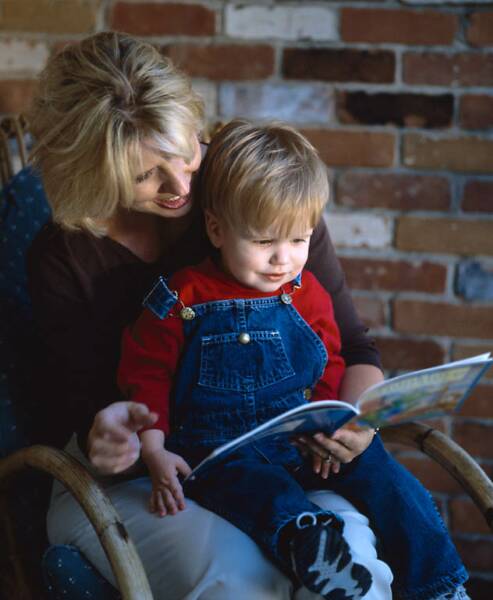
When our children our little we adore them, we are glad when they are down for a nap, and we are glad to come home to them at night. And then they turn into teenagers and we begin to count the days and weeks, and months and years until they are on their own. This is because teenagers can "drive us crazy" with their demands, and their messiness, and their risk taking, and their defiance.
And we get excited helping them plan for college, and moving out, and starting to launch their own life and careers and future. Finally, the day comes for them to leave for college and we drive them there and help them set up their dorm rooms. And then we hug and kiss them good-bye.
Unlike the mother bird who practically pushes the baby birds out of the nest and then watches them automatically fly.....we wonder if we let them go too soon? We can't sleep at night wondering what they are doing, who they are with, and if they are using good common sense, or are they out somewhere in the dark of the night in danger? Essentially, we wonder if they really can "fly."
Welcome to the "Empty Nest Syndrome."
There are new challenges when the children leave home.
Moving on to the second half
Life changes can generally either be seen as losses or as gains. We have lost a child at home but gained a new son-in-law or a new daughter-in-law, and eventually new grandchildren.
All of a sudden the house is quiet, the phone hardly rings, there are no more school events to go to, no more prom dresses to buy, and no more groups of teenagers spending the night.
It hits us in the "pit of our stomachs" that our child is really gone and does not officially live with us anymore. Also, when they do come home, it is only for a visit. The only reminders that they lived here are the pictures on the walls of their growing up years, or the ones we have in photo albums. And all of their things in the hall closet or the attic.
The hardest part is going into their old bedroom.
The "Empty Nest" Syndrome is something new.
As we seek for guidance, we really get little help from looking back to how people have approached this in the past, largely because the "empty nest" has not been part of life for a long time historically. The researchers who wrote Lifetrends: The Future of Baby Boomers and Other Aging Americans, point out:
"the existence of the 'empty nest' stage of family life is more recent than many people realize. In 1900, a 22-year-old woman who married would, on the average, become a widow at age 60 and die herself at age 64. Since it's likely that she would have had many children throughout her reproductive years, there is a good chance that her last child would still have been living at home at the time of her death.'"
Going back even further to biblical times, most parents kept their adult male children living with them, along with their daughters-in-law and their grandchildren.
Freedom all of a sudden
There is no doubt about it-as much as we may love our children, they do tie us down. Our lives center around them from that first day we bring them home as an infant and they keep us up all night, through those days we are going 10 different directions trying to attend all their ball games and recitals, to those times we stay up all night worrying because they are out late with that person we just don't trust. The empty nest brings the potential of a new freedom from those constraints, and for looking to our own interests.
While this freedom can be a relief for many of us, it can also mean some adjustments. Perhaps for the first time ... you feel free to focus on yourself and your own needs. And then you don't really know what those needs are anymore because all of your needs have been caught up in your children's needs for the past 18 years or so.
A New Family Role:
When our last child leaves, it is almost certain that our family role will change. But in what way that role will change is subject to many variations. The best-case scenario is that we will change from a parent-child relationship with our children to more of a relationship of deep friendship and respect between adults. Certainly even in this there will be remnants of the old parent-child relationship around, but the basic relationship will gain a new quality.
For others there is no relationship at all with our adult children. They leave, meet new people, move across the country, find their place in the world, and somehow, your contact with them is reduced to the holidays.
Distance plays a huge part in just how close you can be with you adult children. If you are fortunate enough to have them still live in the same town then as the family roles change, new experiences are born. You get to watch your hard work pay off as your children become parents.
When the last child moves out of the house, we don't lose our family, but rather we take on a new family role. That role can involve some or all of the following:
Grandparenting
However, while this new sense of intimacy often develops, there are also some roles which we find ourselves in that require new skills, and sometimes more work than we thought we had bargained for. These include grandparenting, caring for elderly parents, and helping with adult children in crisis. Grandparenting can involve anything from occasionally helping with grandchildren, a task most grandparents relish, to taking on a major parenting role for our grandchildren because our adult children cannot or will not perform it.
A popular bumper sticker says, "If I had known how much fun grandchildren are, I would have had them first!" Certainly grandchildren can be fun. As a grandparent, you can usually enjoy your grandchildren without having to take the same level of responsibility and burden you did with your children. Usually that is the case-not always. Sometimes today, grandparents are forced into a more active role, either because parents are irresponsible, or because parents run into especially difficult circumstances, such as financial, relationships, or health problems.
Caring for Elderly Parents:
Sometimes no sooner do we finish caring for our children than our parents become less able to care for themselves, and we must take a role in their care. Often this task falls to the woman of the household. Such care can mean anything from helping with cleaning and the more physically exhausting tasks of running a home, to having power of attorney, to constant nursing care of an invalid. Taking a parent or in-law into the home often brings a great deal of stress. In fact, a University of Michigan School of Nursing study showed that those caring for the aged suffered from depression three times as often as the older people they cared for."
Once again, distance plays a major role in just how close you are to your aging parents.
Even Jesus took on a new role as part of his earthly family
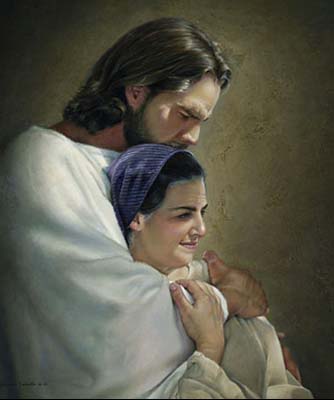
Jesus never married, and so he never had children and experienced "the empty nest." But he did come to a point in his life where he took on a new family role, and he did have to deal with a mother who was not too sure she wanted him to leave the safety of "the family nest."
Most biblical scholars believe that Jesus' earthly father died shortly after Jesus was 12 years old, for that is the last time we hear of his father. Therefore, as the eldest son, he probably had to take on the role of the "man of the house" for many years. However, when he was 30 he left the home to begin his three-year ministry of teaching and healing.
In that ministry he met much stress, opposition and danger. It is probably in reaction to that stress, opposition and danger that his mother came to "rescue" him in the following little story.
“Then Jesus entered a house, and again a crowd gathered, so that he and his disciples were not even able to eat. When his family heard about this, they went to take charge of him, for they said, "He is out of his mind"...
Then Jesus' mother and brothers arrived. Standing outside, they sent someone in to call him. A crowd was sitting around him, and they told him, "Your mother and brothers are outside looking for you."
"Who are my mother and brothers?" he asked. 'Then he looked at those seated in a circle around him and said, "Here are my mother and my brothers! Whoever does God's will is my brother and sister and mother." -- Mark 3:20-21,31-35.
When Jesus' mother and brothers came to "rescue" him, what do you think Jesus was feeling?
___ embarrassed over her doing this in front of his followers?
___ angry that she was treating him like a kid ?
___angry that she didn't understand ?
___ thankful she cared?
___ nostalgic-maybe he wanted to go back home?
Jesus' emotions are similar to how your adult child feels when you remain in the role of the mother or father when they were living under your household. Just like Mary, the mother of Jesus, it is very hard to just turn your child loose into the world when you know how dangerous the world can be.
Something new is happening. Adult children are returning home in great numbers today.
Adult children run into many kinds of stress. It is much harder to make it today than it was 50 years ago. Divorce and financial hardship in an increasingly tight economy are the two most common. In such times, we learn that our adult children are not quite as ready to be on their own as they, and we, once thought. Adult children may ask us for loans, or even for the chance to move back into our home "just for a while-until things get better." In 1980, according to the United States census, almost five hundred thousand divorced men and women in their 20s, and three hundred thousand married couples lived with their parents. What do we do if we are asked to fill such a role?
A New Purpose :
Besides being a time of changing family roles, the time of the empty nest is also a time of flux in relation to one's sense of purpose. For most men, as well as more and more women, sense of purpose is closely tied to paid work.
Most women, on the other hand, have traditionally gotten their sense of purpose from their role as a mother. When children leave home, what happens to that sense of purpose?
Interestingly, women do one of four things:
(1) They continue to play the mother role, with continued nurturing, of their husband, the careers of their older children, and the care and nurturing of their grandchildren;
(2) Or, they begin to try out all the things they had dreamed of doing, but never did because they were mothers instead. Some may go back to work, or start a new career or develop latent talents.
(3) Others who have worked while raising children continue in those jobs.
(4) And last, the ones who become "displaced homemakers" who due to a divorce, or the death of their husbands have to re-enter the job market just to survive.
For those in this latter category, Cynthia Coad has written a handbook to help women with this transition called, Your Full Future: After the Empty Nest.
She writes in that book, "The first one-half of the female's life has been occupied in serving others. It was a path she chose, and one she accomplished well. In many cases this meant that her own personal career goals were not fully developed. A time comes, however, when the woman looks for her full future in the form of a career. The second one-half of her life offers her that opportunity."
And so, whether one is male or female, the time of the empty nest can be a time when we look to a new life purpose.
A New Marriage Partnership:
Growing and changing are the central indications that something is living, and so if our marriage is truly alive it must change and grow. Especially is this true when the last child leaves the home. When children are in the home much activity centers around them. They provide a common focus for parents who share in the task of raising them. But when they are gone, what will then be the common focus that the couple has to hold them together?
Many couples at this stage discover that the children were the only thing they had in common. This discovery generally means a time of strain for the marriage, unless they explore and discover some common interests.
What is more, since the empty nest period has other big life changes, like a woman's new professional explorations, or a man's retirement, unless a couple learns to adapt to those changes, the marital strain will be even more severe. Those marriages which survive and even thrive in this period are those where both persons are willing to change and to not hold on to the past relationship, but look forward to a new, different and exciting one.
This is a danger period for many marriages, because some couples have stayed together ONLY because of the children and were just waiting for the last one to leave before they divorce. Then add to that male mid-life crisis, and female menopause and the strains are very tough on any marriage.
A New Spirituality:
When we are young we have a tendency to be preoccupied with the material aspects of life. But as we mature we see more and more that the physical is not all there is to life. While we still feel there is much of life ahead, we realize that we are aging, and we start to think more of where life is headed, and what is beyond it. All of this leads us to consider our spiritual nature more and more. This is one reason that most churches are filled with the elderly.
By this time in life, many people have matured and given up on their dreams of becoming the President of the company, or the greatest actress in the world. They have also accumulated many of the material things that they pursued as youth, and are looking for a deeper purpose in life that is invisible.
This can be one of the most productive times in someone's life when they can turn their full attention to God and develop a strong, intimate relationship with Him.
A New Future:
At each stage of life a person has to make the decision, do I spend my time looking back at what I have lost, or do I look ahead to the new future that is in store for me? Certainly, we do lose something when our children go off on their own. We lose a role we have lived with for 20 or 30 years, and we put behind us a time when we nurtured young lives and had them constantly around to provide companionship. We have also lost our youth, and some mourn that as well.
We are taught in our culture to idealize youth and fear aging as nothing more than a path toward death. But for those with their eyes open to the possibilities, our 40s, 50s and 60s provide new opportunities for self-exploration. We have often gained a wisdom and a self-confidence that we longed for in our younger years, and these can help us toward a life that is more fulfilling.
The time of the empty nest, then, will be what we make it. For those of us who look only at what we have lost, it will be a hard time. But for those of us who look at the new things this period of life brings to us, it will be a time of exciting discovery.
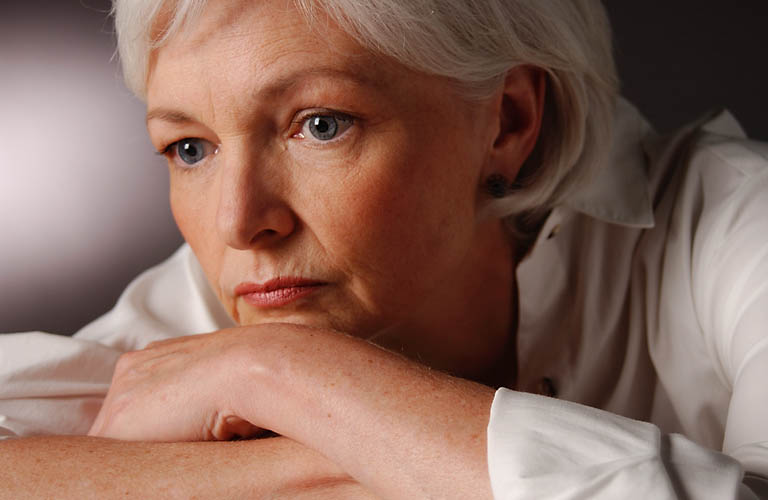
This is a poignant period of adjustment because we miss the presence of each son or daughter who made so many demands on our time. We miss the conversation, the mealtimes, the things we once did with them as a family unit. Sometimes the absence of our children rob us of our own identity.
Mel Roman and Patricia Taley wrote in The Indelible Family:
"When all of the children leave home and the nest is empty, some parents have no idea who they are or what to do with themselves. Their identity, both as individuals and as family members, has been so tied up in mothering and fathering that they are lost. They feel worthless and useless. They feel robbed of their roles and of their children. Although they mourn the loss of their children, they also mourn the loss of themselves. The children will be all right; they have everything to look forward to. The parents are not sure that they have 'anything to look forward to."
This empty sadness often hits one parent more painfully than the other. Sometimes it hurts the wife most, especially if the husband's life is still wrapped up with his job. He can turn his energies elsewhere, but she has to face this meaninglessness alone. Sometimes it is the other way around, and the husband may feel he has lost his best companion when a child leaves home.
Besides missing the children, there is also the crisis of becoming reacquainted with the one who was there with you before the children ever came onto the scene. It may sound absurd to talk about become reacquainted with your own spouse, who has been at your side through all the childhood illnesses, the excitement of Little League heroics, graduations, and recitals. Although your mate has shared your worries and your joys, it may be difficult to take up just where you left off 30 years ago!
And what if you have been divorced and then have to face the "empty nest?" Then you are really facing it alone, without even a spouse to turn to for companionship. This is the hardest scenario to face, going through a divorce, being single again, AND loosing your children all at the same time. Or maybe you are divorced and then you meet someone right at the time your children are leaving home. Then you not only have to get used to them being gone, but you have to get used to having a new spouse and so do your children. It could not be more complex.
DANGER AND OPPORTUNITY
There are always two sides to a crisis. On one hand a crisis spells danger. Since the marriage has come to a turning point, everything could end in disaster. But the other side is that a crisis is an opportunity to meet the challenge and become stronger! If the marriage is healthy, this can be a great time of rediscovering the delights and freedom that many people look forward to for years. Imagine how much a couple in their middle years have invested in their marriage. Consider the common memories they share, the mutual experiences that have molded them into one being.
That shared history, along with a commitment to the future, can provide the resources for deepening the relationship. They have experienced too much together to allow this challenge to destroy their marriage.
COPING WITH THE EMPTY NEST:
How you cope with the "empty nest" will differ for each person. It will depend on how close you were to your child as they grew up, and how close you both want to remain. While it is a time of great joy, it is also a time of great sadness, because you are loosing an identity that you had as a parent of some 20 years, and now you no longer have that identity.
If you can look at it though as another passage of life that we all go through and realize that you are now in another phase, one of great rewards and rediscovery of yourself and your relationship to God and your eternal future then it can go smoothly and be one of the most rewarding and productive times of your life.
We accept PayPal and all other major credit or debit cards. Once you hit the PayPal button it will allow you to pay with PayPal or another major credit or debit card. No PayPal account is required