The Benefits of Telephone and Online E-Mail Counseling Therapy
Patricia Jones, M.A.
If you feeling overwhelmed with an issue that you are dealing with and would like some help and advice please do not hesitate to contact me by doing the following:
The Benefits of Telephone and Online Counseling Therapy
Telephone Therapy:
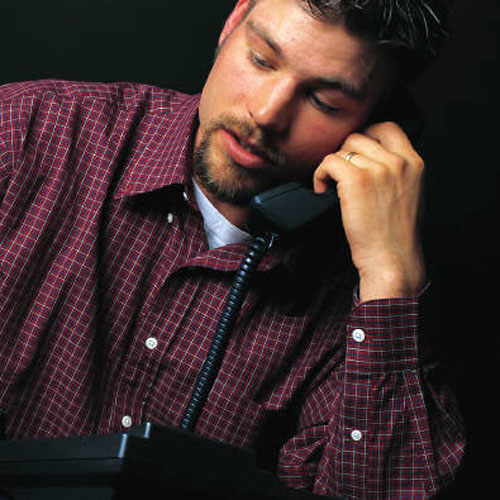
It is a known fact that many people express more about themselves or can share their concerns better on a telephone than they can face to face. But when they are in front of someone, in person, they become shy, timid, tongue tied, or generally uncomfortable. On the telephone they are not worried about physical appearances or first impressions. In other words, they are more free to be themselves without the physical entering into the equation and thus tend to be more relaxed and less stressed and can better focus on the conversation that they are having.
It is hard to share with another person, usually a complete stranger at first, which the counselor is, one's most intimate life and concerns. On the telephone it is easier.
In addition to that, telephone and online therapy have no time or location boundaries! Sessions can be done at any time of the day or night, in the complete privacy and comfort of your own home or office. Turn around response time for online therapy is excellent and allows for more measured and thoughtful responses. Busy schedules? Traffic? Car in the repair shop? Illness? No problem -- therapy adapts to your schedule needs by offering complete flexibility of location and time.
Telephone and online therapy is a perfect medium that allows the client to say in words, without outside constraints what they need help with. No matter what the issue, a one on one conversation with a counselor can be very rewarding and helpful to the client. Counseling involves marriage counseling, mental health matters, crisis intervention, spiritual counseling, assessment and coaching concerned relatives of individuals afflicted by various disorders.
Telephone and online therapy provides access for the homebound, geographically isolated or stigmatized client who will not or cannot access local treatment. Hearing disabled people, celebrities, business travelers, shy and introverted people, concern about stigma and the socially phobic are but some of the individuals who benefit from this type of therapy. Self-help materials are also highly available with online services.
Many misunderstandings and misinterpretations that occur in face-to-face therapy may be minimized with telephone and online treatment.
Online (E-mail) Therapy:
Many people find it easier to express their feelings and thoughts by writing and typing out their internal experiences on a computer. This is why I refer to email counseling as "Journaling." Even in face to face counseling many times the client is given a homework assignment of writing down all of their thoughts and feelings, or of being asked to write a letter to someone who has died, etc. which is a catharsis or cleansing for the client. This is because putting things down on paper reinforces what one feels and also helps one to let go of bitter feelings.
People also discover that by typing out their situation in words, as they go along, the situation becomes clearer for them. Putting something in words and writing it down actually puts the situation in a clearer order and helps the client to see the " bigger picture." I have had many clients say that putting their concerns down on paper was very productive in helping them to come up with the solutions to their problems.
Email therapy offers more ease of comfort and safety for those individuals who have difficulty opening up and talking about themselves in front of another person. Some individuals are more honest, more uninhibited, and more expressive in writing than face-to-face or on the telephone. As such, email therapy offers a level of personal privacy that extends beyond what telephone therapy and face-to-face treatment can offer.
With online therapy, you can set your own pace. You can take time to compose, and to reflect on your responses and those of your therapist, and respond when you are ready. Messages are usually answered within 24 hours of receiving an email. It is an excellent way to review session topics, insights and assignments. Emails can be printed out and re-read by the client for encouragement over and over again.
It is also a wonderful way to keep a diary of your situation as it unfolds.
Patricia Jones, M.A.
Pastoral Counselor
We accept PayPal and all other major credit or debit cards. Once you hit the PayPal button it will allow you to pay with PayPal or another major credit or debit card. No PayPal account is required.